






The Impact of Robotics on Education
2016-11-21
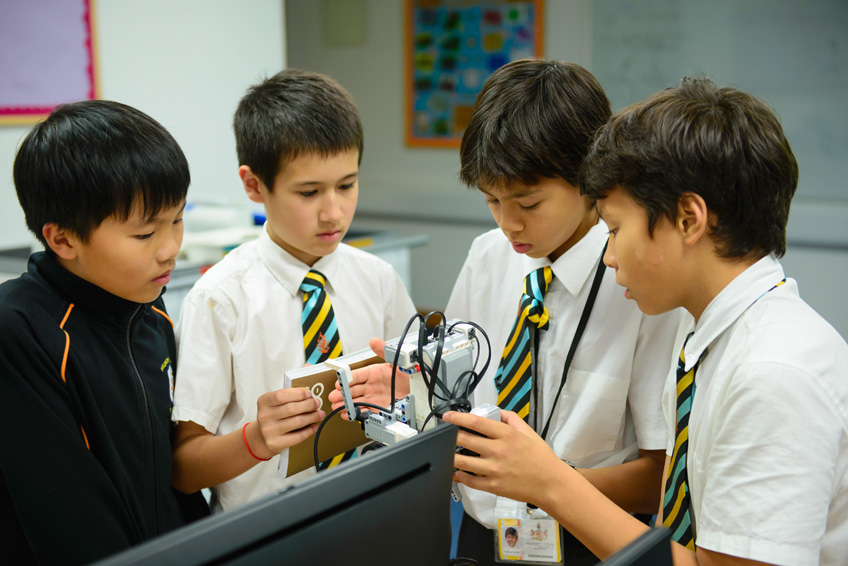 With the global growth in STEM related careers - science, technology, engineering and mathematics, Wellington need to encourage pupils to develop their skills and talents in these areas.
Robotics helps break down the barriers between these subjects, enabling pupils to make connections between them, developing a holistic understanding and applying them to real-world scenarios outside the normal curriculum. It allows pupils to get together into teams to analyse problems, suggest solutions and develop a finished article that will hopefully be quicker, faster and more efficient than your opponents.
Robotics has been introduced at Wellington as research has shown that children who get involved in robotics are more likely to pursue STEM courses and careers. It also shows an increase, especially for girls’ participation in engineering fields if they are introduced to robotics.
To add to this, Dr. Theodore Chiasson, dean of IT from the College of North Atlantic and the country organiser for Qatar for the World Robotic Olympiad put it in a different perspective, “I have found that when you build a robot yourself and you want it to do something new, you have to learn more maths, more science or more physics, to be able to do that. The motivation for the learning is then within the student, for which makes for a complete paradigm shift in terms of the learning environment”, he notes.
Robotics can also help develop personal, learning and thinking skills (PLTS); independent enquirers, creative thinkers, reflective learners, team workers, self-managers, and effective participants. All these skills are integral to learning for life and are all interconnected, so when solving problems in Robotics they will be applying all these skills. This helps to create a balance between academic and vocational success that is vitally important when our pupils are going out to work.
But we should not stop there when looking at the additional skills that robotics can offer our pupils. At Wellington College International Shanghai, we encourage pupils to develop the Wellington Values: Courage; Respect; Integrity; Kindness; and Respect. These add to the holistic skills that we want in our pupils when they leave the College.
Each subject has its own role in the success of robotics.
With the global growth in STEM related careers - science, technology, engineering and mathematics, Wellington need to encourage pupils to develop their skills and talents in these areas.
Robotics helps break down the barriers between these subjects, enabling pupils to make connections between them, developing a holistic understanding and applying them to real-world scenarios outside the normal curriculum. It allows pupils to get together into teams to analyse problems, suggest solutions and develop a finished article that will hopefully be quicker, faster and more efficient than your opponents.
Robotics has been introduced at Wellington as research has shown that children who get involved in robotics are more likely to pursue STEM courses and careers. It also shows an increase, especially for girls’ participation in engineering fields if they are introduced to robotics.
To add to this, Dr. Theodore Chiasson, dean of IT from the College of North Atlantic and the country organiser for Qatar for the World Robotic Olympiad put it in a different perspective, “I have found that when you build a robot yourself and you want it to do something new, you have to learn more maths, more science or more physics, to be able to do that. The motivation for the learning is then within the student, for which makes for a complete paradigm shift in terms of the learning environment”, he notes.
Robotics can also help develop personal, learning and thinking skills (PLTS); independent enquirers, creative thinkers, reflective learners, team workers, self-managers, and effective participants. All these skills are integral to learning for life and are all interconnected, so when solving problems in Robotics they will be applying all these skills. This helps to create a balance between academic and vocational success that is vitally important when our pupils are going out to work.
But we should not stop there when looking at the additional skills that robotics can offer our pupils. At Wellington College International Shanghai, we encourage pupils to develop the Wellington Values: Courage; Respect; Integrity; Kindness; and Respect. These add to the holistic skills that we want in our pupils when they leave the College.
Each subject has its own role in the success of robotics.
- Design and technology - used to develop sophisticated structures that can manoeuver courses and obstacles and complete challenges.
- Computer science - used to code the robots and enable the interaction between the inputs (sensors) and their outputs (motors).
- Mathematics - advanced formulae to improve the functionality of computer programs.
- Science - used when exploring the effects of friction, gearing mechanisms and aerodynamics.
相关资讯

不要错过上海惠灵顿第二届舞蹈表演"Connecting eMotions."2025-04-17
诚邀您参加 5 月 8 日的 “Connecting eMotions”--我校的第二届舞蹈表演! 我们将隆重推出 “Connecting eMotions”,这是来自舞蹈资优学生项目和舞蹈辅助课程教学活动的学子们联袂献上的第二场表演。 今年的主题是颂扬连结的力量--既有情感上的,也有合作上的。我们的舞者通过团队协作共同创造出充满活力的作品,不仅视觉效果震撼,而且内涵丰富。在此过程中,他们培养了
点击阅读
解锁未来之路 | IGCSE/IB选课说明会暨校园开放日2026-02-06
在孩子迈向中学阶段的关键路口,如何选择一条真正适合其个性与潜能的学业路径?怎样在丰富的课程选项中做出明智决策,为未来升学和职业发展奠定坚实基础? 上海惠灵顿诚挚邀请您于3月10日莅临校园,参加我们特别举办的 IGCSE、IB选课说明会暨校园开放日。这不仅仅是一场校园参观,更是一次干货满满的教育规划深度对话。欢迎校外7年级及以上感兴趣的家庭报名参与。在校家长请留意同日将分时段举办面向在校家庭的 I
点击阅读

What is iGEM and our project, Barnacure?2025-10-09
iGEM Competition & Barnacure Team Members Team Illustration by Joanna, Year 11Article written Jing Jing, Year 11Primary Principal Investigator: Thomas Edwards, Head of Biology & Head of Science What
点击阅读